
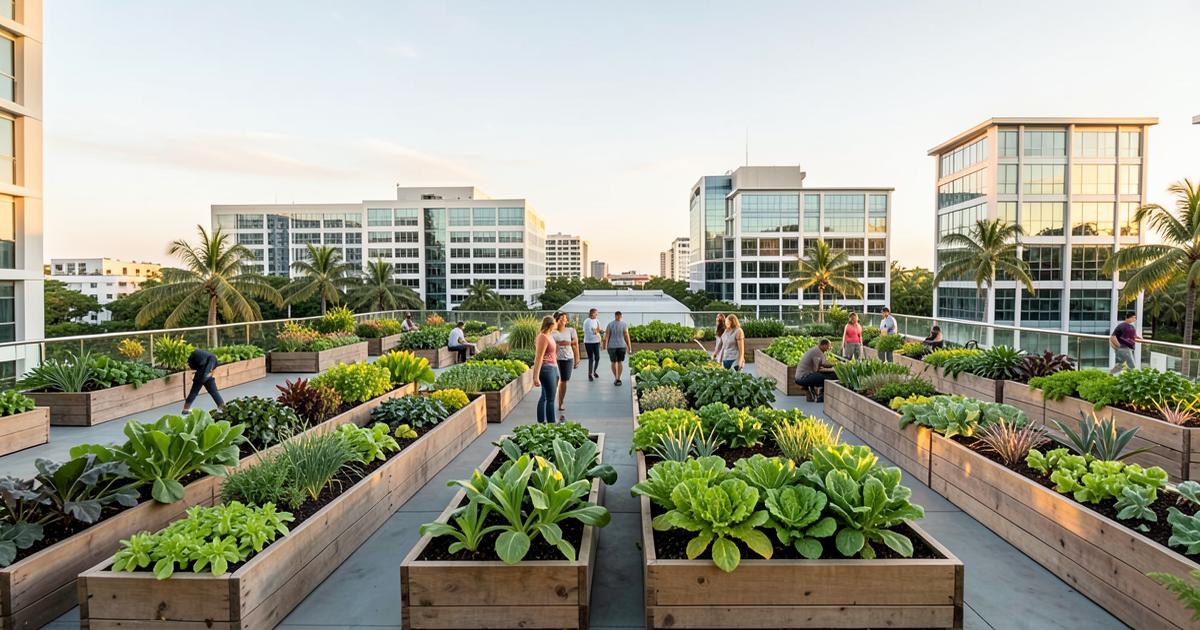
A corporate garden is an edible growing space installed inside a company —on a rooftop, terrace, or green area— and maintained professionally, where employees take healthy breaks, connect with each other, and harvest fresh food without taking on the work of caring for it. It's not a decorative planter box: it's a wellness program with measurable impact.
Why it's growing
After the pandemic, employees expect work to actively support their physical and mental health, and companies are looking for tangible benefits that people can feel and see. At the same time, pressure to report on sustainability (ESG) keeps growing. A garden answers both needs: it takes care of people and provides a real story of sustainability and community.
How the turnkey model works
The design principle is simple: the employee enjoys the garden, not the upkeep. A specialized provider designs the space, installs it (beds, irrigation, first planting), maintains it with recurring visits, and adds value through workshops. The company only provides the space and the decision to move forward. It's the same recurring-service logic already accepted for landscaping or pool maintenance.
What the company gains
Healthier, less stressed employees, a more connected culture, fresh food, and a brand that projects care and sustainability. In the guides ahead, we break down the evidence behind each of these benefits.
Want to see what this could look like at your company? Request information.
Sources
Human Spaces Report (2015); documented corporate case studies (Tiffany & Co., Kohl's). See articles 3 and 10 for details.