
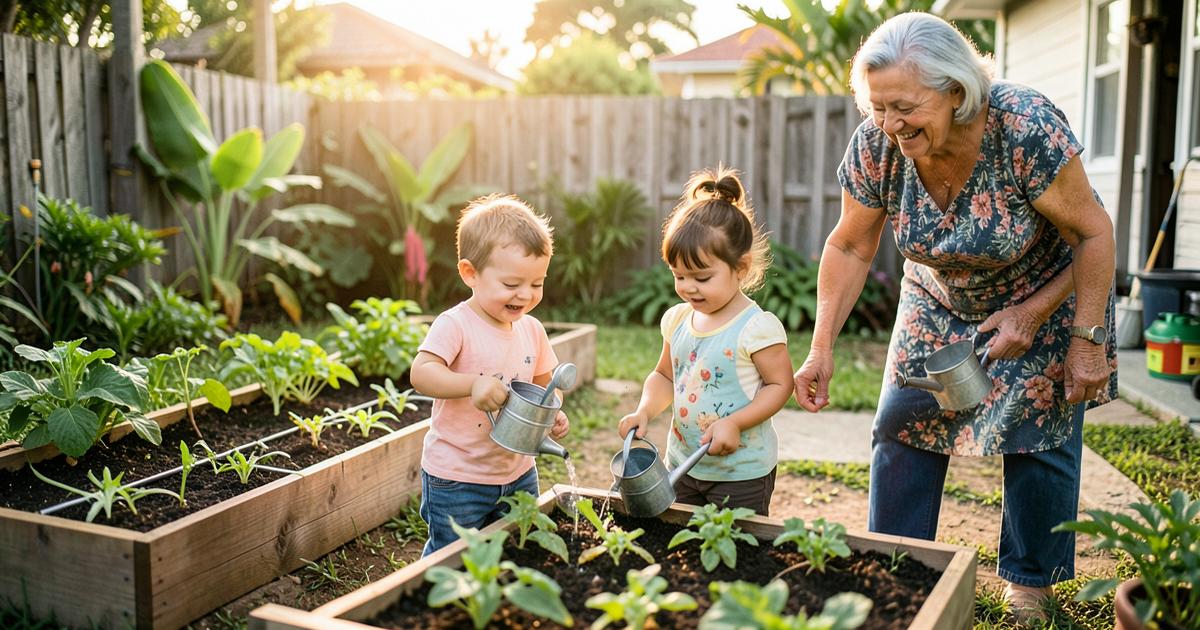
A home garden is much more than food: it's a shared routine, a living science class, and a screen-free space. Research on child education and health is consistent: kids who take part in growing food are more willing to eat fruits and vegetables.
They eat what they grow
Studies on school and family garden programs show that kids who grow vegetables increase both their consumption and their preference for them. A cherry tomato a child watched grow isn't rejected — it's celebrated. That connection to where food comes from is hard to achieve any other way.
Science, patience, and responsibility
Gardening teaches cycles, cause and effect, and the value of consistent care. Watering, spotting a pest, waiting for the harvest — these are lessons in patience no screen can offer. Small, assigned tasks — each child with their own plant — build responsibility without pressure.
How to get started with them
Start with fast, eye-catching crops: radishes, lettuce, and cherry tomatoes deliver results in weeks. Set aside a bed or pot as "their" area. And don't worry about perfection — with our maintenance service, the garden thrives even while the family is still learning.
Let's plant a new routine for your family. Request information.
Sources
Reviews on gardening and children's eating habits (Journal of the Academy of Nutrition and Dietetics); farm-to-school programs.