
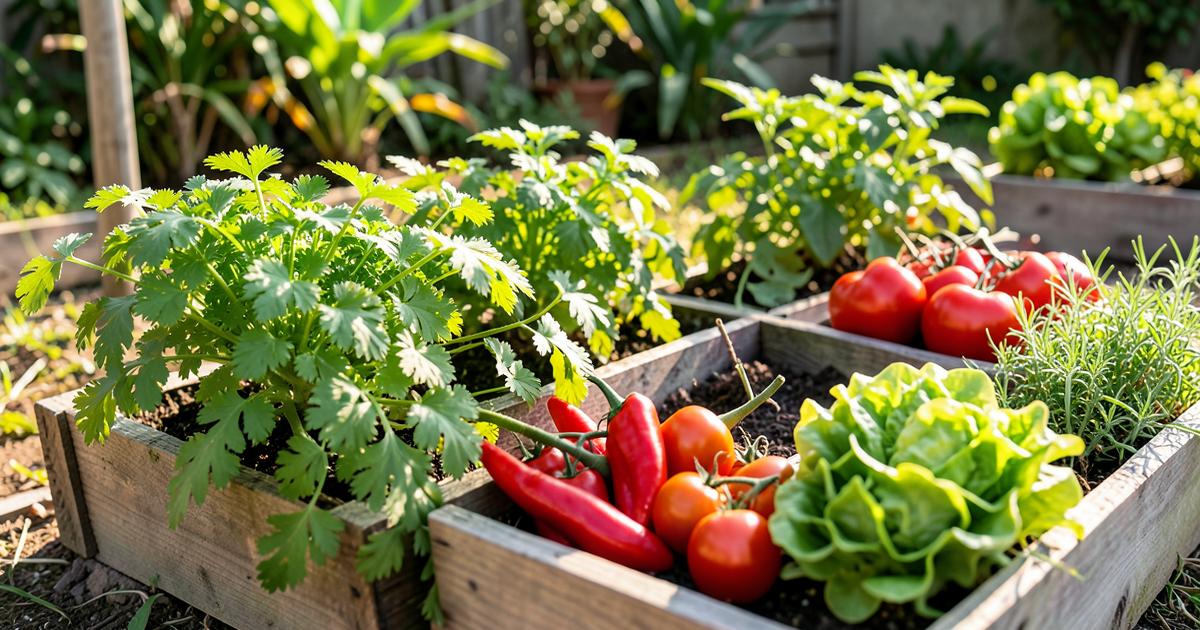
One of Puerto Rico's biggest advantages is that, with no risk of frost, you can harvest all year round. The key is planting the right crops in the right season.
Two seasons, not four
The San Juan area sits in zone 10b, with two distinct seasons: the dry season (November to April), ideal for tomatoes, peppers, beans, and cooler-climate crops; and the wet season (May to October), better for heat- and humidity-tolerant tropical crops. Large tomatoes planted in the wet season tend to rot or split from excess water.
The most reliable crops
In tropical heat, cherry tomatoes do very well (they resist cracking), along with peppers (including sweet peppers and jalapeños), beans and pigeon peas, eggplant, okra, sweet potato, and yuca. Among leafy greens, loose-leaf and romaine lettuce, local lettuce, arugula, and tropical spinach all work well; kale prefers cooler months and some shade.
Herbs and local flavor
Cilantro, recao (culantro), basil, and ginger thrive and connect the harvest to Puerto Rican cuisine. The University of Puerto Rico's Agricultural Extension Service offers free guides for home gardens, which it describes as an alternative for household food security.
The challenge: heat, humidity, and fungus
The main challenges are heat stress, pests, and fungi that thrive in humidity. Good design —partial shade, proper irrigation, and the right varieties— solves most of them.
We design your garden around your space and the season. Request information.
Sources
Agricultural Extension Service (UPR); planting calendars for San Juan (zone 10b); tropical horticulture guides.