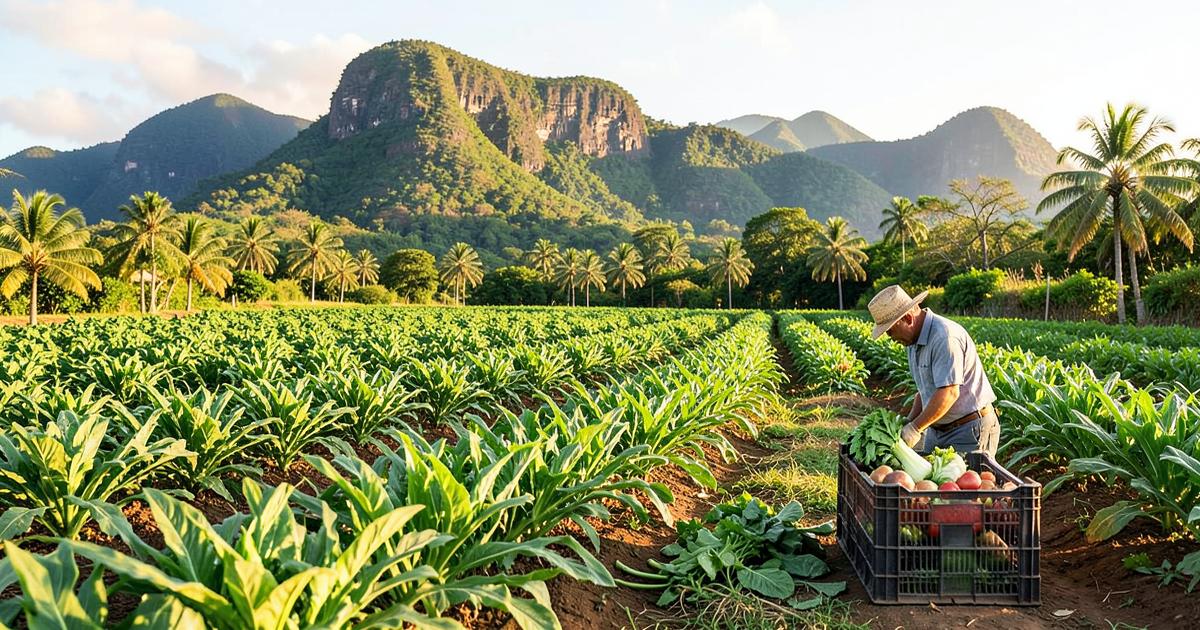
Puerto Rico imports around 85% of the food it consumes, according to USDA data and multiple studies. For an island in the path of hurricanes, that dependence is a structural vulnerability — and also an opportunity.
A country that stopped farming
Agriculture, once the engine of the economy, today represents a minimal fraction of gross domestic product —around 0.6%, compared to roughly 6% in neighboring Dominican Republic— and employs about 2% of workers. It's estimated that less than 5% of the fresh produce sold on the island is grown locally.
Why it matters for companies
Every supply chain disruption —a hurricane, a global shock— is felt immediately on shelves and in prices. Events like Hurricane Maria made that fragility clear. Growing food, even on a small scale, is an act of resilience.
The garden as symbol and as contribution
A corporate garden won't feed the island, but it does connect a company to one of the country's most deeply felt priorities and educates its people about where food comes from. It's a concrete way for a Puerto Rican brand to put its own grain —literally— toward food security.
Add your company to the solution. Request information.
Sources
USDA; Princeton JPIA (2022); Puerto Rico Report; food availability studies in PR (PMC, 2025).