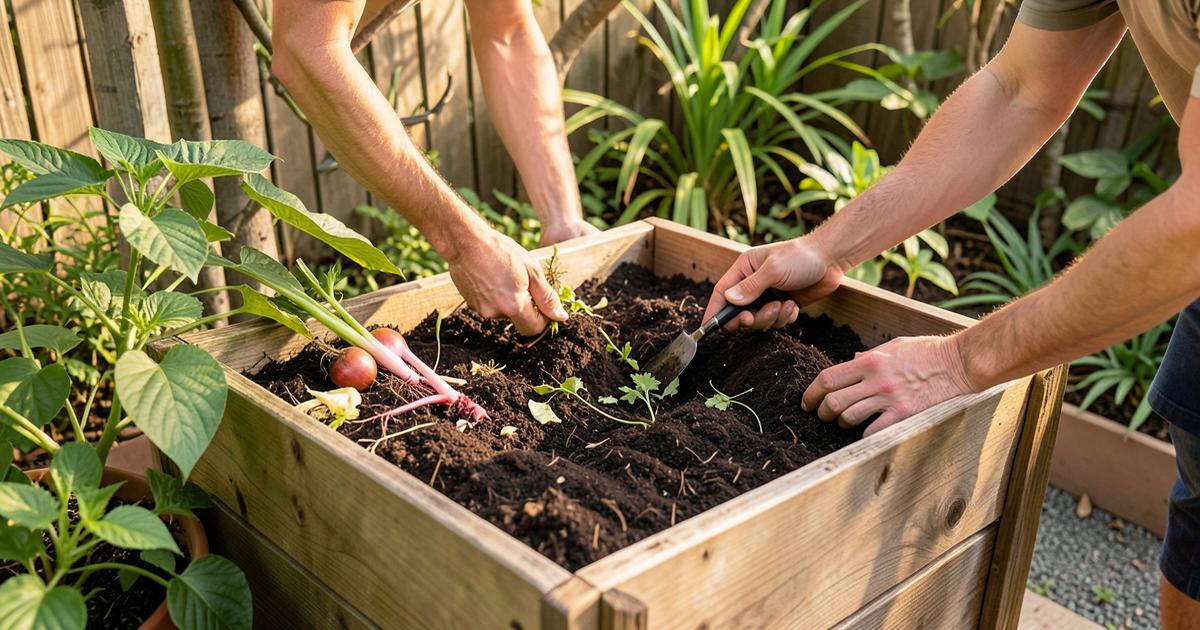
Composting is the home garden's virtuous circle: kitchen scraps become the soil that feeds the next harvest. In the tropics the process moves fast, and when managed well, it produces no odors or pests.
What goes in and what doesn't
In simple terms: raw plant material goes in; anything animal-based or greasy stays out.
- Yes: fruit and vegetable peels, coffee grounds with filter, eggshells, dry leaves, grass clippings.
- No: meat, dairy, fats, and food cooked in oil (they attract pests).
The green and brown balance
Healthy compost mixes "green" material (moist, nitrogen-rich: kitchen scraps) with "brown" material (dry, carbon-rich: leaves, cardboard). A practical ratio is one handful of green to two of brown. In a humid climate like ours, extra brown material keeps the pile from turning soggy and smelly.
From landfill to garden
The EPA estimates that food scraps are one of the largest components of household waste. Composting them cuts what your family sends to the landfill and gives back, for free, the best soil amendment there is. In our installations, composting is part of the plan from day one.
Close the loop right in your own backyard. Request information.
Sources
EPA home composting guide; JCA organic waste management programs.